DRY NEEDLING/IMS
Muscle pain, tightness, and sensitivity can sometimes persist even when you are stretching, exercising, or trying to stay active.
At Strathcona Physical Therapy, we provide specialized dry needling and intramuscular stimulation (IMS) in Edmonton as part of individualized physiotherapy treatment for appropriate musculoskeletal conditions.
Our clinic is home to physiotherapists with advanced training and extensive experience in dry needling and IMS. In Alberta, dry needling is a restricted activity that requires additional post-graduate training, demonstrated competency, and authorization through the College of Physiotherapists of Alberta.
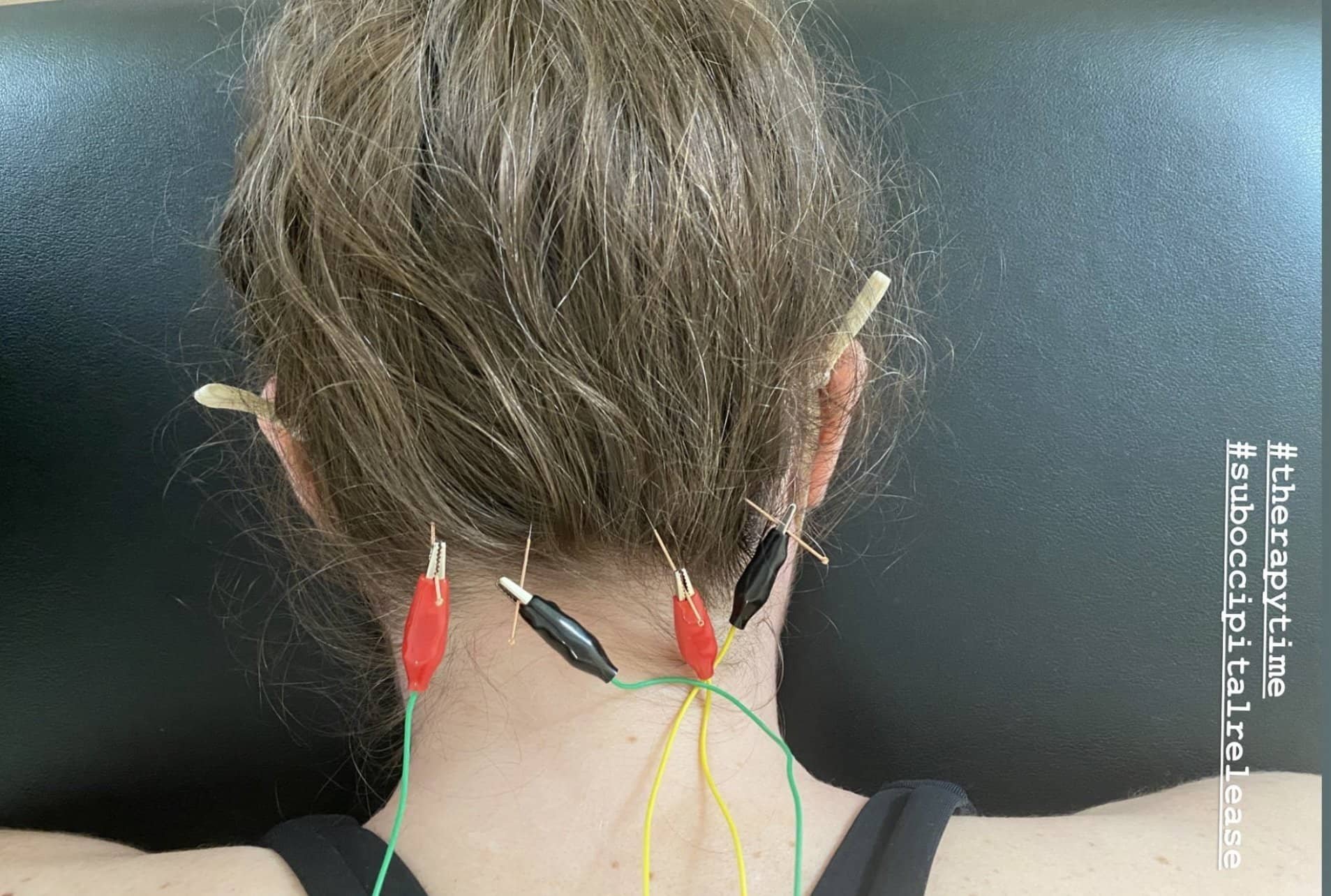
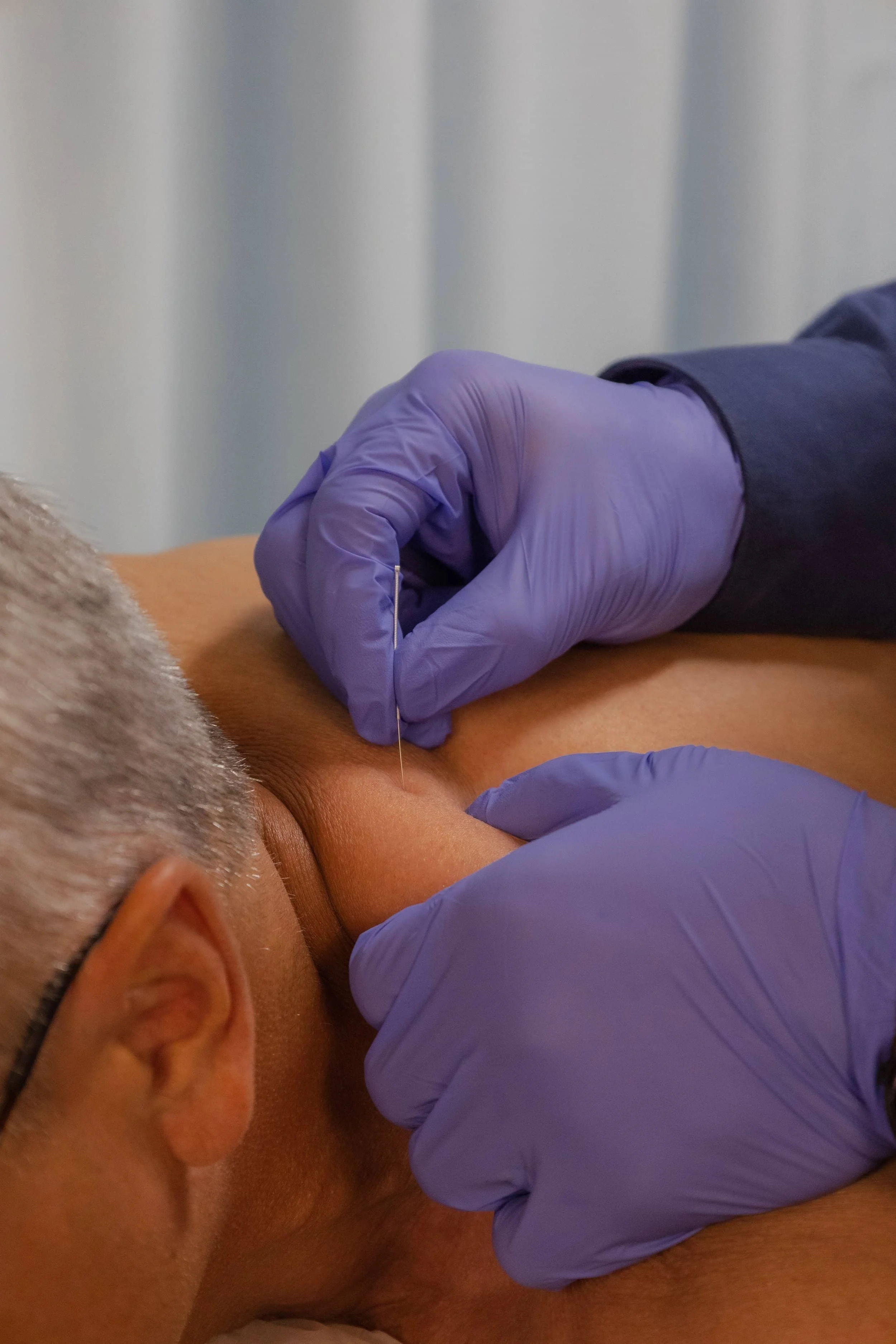
Dry needling involves the insertion of a thin, solid filament needle through the skin into selected muscles or other appropriate tissues based on the physiotherapist's assessment. Unlike an injection, the needle does not deliver medication.
Depending on your condition and assessment findings, dry needling may be used to help reduce pain, address muscle-related symptoms, and improve movement or function. It may be considered for certain presentations involving myofascial pain, muscle tenderness, or other musculoskeletal conditions where needling is clinically appropriate.
Dry needling is rarely the entire rehabilitation plan. When appropriate, we combine it with therapeutic exercise, progressive strengthening, mobility work, movement retraining, education, and other physiotherapy interventions so that improvements can be carried into meaningful movement and activity.
Our goal is not simply to needle where it hurts. We first determine why you are experiencing pain or movement limitations and whether dry needling is an appropriate part of your rehabilitation plan.


What Is Dry Needling?
Dry needling is a treatment technique used by appropriately trained physiotherapists for selected musculoskeletal and neuromuscular conditions.
It involves inserting a thin, solid filament needle through the skin into selected muscles or other appropriate tissues based on the findings of your physiotherapy assessment. The needle is “dry,” meaning that no medication or substance is injected.
Dry needling may be used to help manage pain, muscle sensitivity, movement restrictions, and other musculoskeletal impairments when clinically appropriate.
It is not intended to be a stand-alone treatment for every painful condition. At Strathcona Physical Therapy, dry needling is integrated into a broader rehabilitation plan when assessment findings suggest it may be beneficial.
What Is IMS?
IMS stands for Intramuscular Stimulation. It is a needling approach commonly used by physiotherapists for certain neuromuscular and musculoskeletal pain presentations.
IMS involves inserting fine needles into selected muscles or related tissues based on the physiotherapist's assessment.
The terms IMS, dry needling, and trigger point dry needling are sometimes used interchangeably by patients and clinics, but different needling approaches can involve different assessment models, clinical reasoning, and techniques.
At Strathcona Physical Therapy, the specific technique and treatment area are selected according to your symptoms, physical examination, and the training and clinical judgment of your physiotherapist.
Dry Needling vs. Acupuncture
Dry needling and acupuncture both use thin, solid needles inserted through the skin, but they are not necessarily the same clinical approach.
In physiotherapy, dry needling and IMS are generally used within a musculoskeletal and neuromuscular assessment and rehabilitation framework. Needles may be directed toward muscles or other relevant anatomical structures based on the patient's presentation.
Traditional acupuncture developed from a different theoretical and clinical framework and may use traditional acupuncture points and meridian-based approaches.
Importantly, training in one needling system does not automatically establish competence in another. In Alberta, physiotherapists performing needling must have the appropriate education, competency, and authorization for the techniques they use.
How Does Dry Needling Work?
The effects of dry needling are more complex than simply “loosening a tight muscle.”
Research suggests that needling may influence local tissue responses, pain processing, neuromuscular activity, and the nervous system's response to sensory input. However, the exact mechanisms responsible for clinical improvements are still being investigated.
Some patients experience a temporary reduction in pain or sensitivity or an improvement in movement following treatment. This can create an opportunity to progress exercise and movement more comfortably.
Dry needling should therefore be viewed as one possible tool within rehabilitation, rather than a treatment that automatically fixes the underlying cause of pain.
What Conditions May Benefit From Dry Needling?
Dry needling may be considered for selected people experiencing musculoskeletal pain, muscle-related symptoms, mobility limitations, muscle performance deficits, or movement dysfunction.
Depending on the individual assessment, it may be incorporated into physiotherapy for presentations involving:
Myofascial pain
Neck and shoulder pain
Back and hip pain
Certain headache presentations associated with musculoskeletal impairments
Some temporomandibular (TMJ/TMD) presentations
Muscle strains and sports-related injuries
Muscle guarding or sensitivity
Selected tendon-related conditions
Other musculoskeletal conditions where needling is clinically appropriate
Having one of these conditions does not automatically mean dry needling is the right treatment.
Your physiotherapist will first determine what may be contributing to your symptoms and whether needling is appropriate, safe, and likely to add value to your rehabilitation.
Trigger Points & Myofascial Pain
A myofascial trigger point is generally described as a sensitive area within skeletal muscle that may be painful when compressed and may contribute to local or referred symptoms.
Trigger points have historically been an important part of dry needling treatment models.
However, modern pain science recognizes that musculoskeletal pain is often influenced by multiple factors, including tissue sensitivity, loading, movement, sleep, stress, previous injury, and nervous-system processing.
For this reason, we do not assume that every painful area is simply caused by a “knot” that needs to be released.
When trigger point needling is appropriate, it is used within the context of a broader assessment and rehabilitation program.
Dry Needling for Neck & Shoulder Pain
Neck and shoulder symptoms may involve combinations of muscle sensitivity, mobility limitations, strength or endurance deficits, joint-related factors, and sensitivity of the nervous system.
For selected patients, dry needling may be incorporated into treatment to help manage pain or muscle-related symptoms.
Depending on your assessment, treatment may also include:
Neck and shoulder mobility
Scapular rehabilitation
Progressive strengthening
Postural and movement strategies
Work or activity modification
Exercise for muscular endurance
Education and self-management
The goal is not simply to temporarily reduce muscle tension, but to help restore the movement and physical capacity needed for everyday activity, work, or sport.
Dry Needling for Back & Hip Pain
Back and hip pain can have many different causes and contributing factors, so dry needling is not appropriate for every presentation.
When examination findings suggest that muscle or neuromuscular impairments are relevant, dry needling or IMS may be considered as one component of treatment.
It may be combined with mobility exercises, progressive strengthening, trunk or hip rehabilitation, movement retraining, activity modification, and gradual return to meaningful activities.
Dry needling does not “put a disc back into place” or reverse arthritis or other structural changes. Its role is to help address selected impairments as part of rehabilitation.
Dry Needling for Sports Injuries
Athletes and active individuals sometimes use dry needling as part of rehabilitation for muscle-related pain, movement restrictions, or other appropriate musculoskeletal impairments.
However, returning to sport requires much more than reducing muscle soreness or tightness.
When dry needling is used, treatment may then progress into:
Strength and conditioning
Progressive tissue loading
Mobility
Running or jumping
Agility and change of direction
Sport-specific movement
Gradual return to training and competition
Dry needling may support rehabilitation, but rebuilding physical capacity is what prepares the body for the demands of sport again.
What Happens During Dry Needling Treatment?
Before needling begins, your physiotherapist will assess your condition and determine whether dry needling is appropriate.
They will explain the proposed treatment, expected benefits, potential risks, alternatives, and what you may experience during and after treatment. Your informed consent is required before dry needling is performed.
During treatment, the physiotherapist inserts thin, sterile needles into carefully selected areas based on your assessment.
The number of needles, depth, location, technique, and duration can vary considerably depending on the area being treated, your symptoms, your tolerance, and the specific needling approach being used.
Your response is monitored throughout treatment.
After needling, your physiotherapist may reassess movement or symptoms and integrate appropriate exercise or other rehabilitation strategies.
Does Dry Needling Hurt?
The experience varies from person to person and according to the area being treated.
The initial needle insertion may cause little sensation for some people. When a needle reaches a sensitive muscle or tissue, you may experience a brief ache, cramping sensation, pressure, or muscle twitch.
Temporary muscle soreness after treatment is relatively common and may feel similar to soreness after exercise.
Small amounts of bleeding or bruising can also occur.
Treatment intensity can be adjusted according to your response and tolerance. Dry needling does not need to be extremely painful to be effective.
What Is a Local Twitch Response?
A local twitch response (LTR) is a brief, involuntary contraction of muscle fibres that can sometimes occur when a needle stimulates a sensitive area within a muscle.
You may feel it as a quick twitch or cramping sensation.
Historically, producing a local twitch response was often considered an important goal of trigger point dry needling.
However, a twitch response is not required for every dry needling treatment, and its presence does not guarantee a better clinical outcome.
Whether your physiotherapist attempts to produce a twitch response depends on the technique being used, treatment goals, anatomical region, and your individual presentation.
Dry Needling With Electrical Stimulation
In some cases, dry needling may be combined with electrical stimulation.
After needles have been appropriately positioned, a controlled electrical current can be applied through selected needles. This produces a sensory or muscular response depending on the treatment parameters being used.
Electrical dry needling may be considered for certain pain or neuromuscular presentations, but it is not required for every patient or every condition.
Your physiotherapist will determine whether electrical stimulation is appropriate based on your assessment, medical history, treatment goals, and relevant precautions.
Is Dry Needling Safe?
Dry needling is an invasive procedure and, like any procedure that passes through the skin, has potential risks.
Common temporary effects can include:
Muscle soreness
Minor bleeding
Bruising
Temporary discomfort
Fatigue or light-headedness
Less common but potentially serious complications can occur, including infection, nerve or vascular injury, and pneumothorax when needling near the chest or certain upper-body regions.
This is why appropriate training, anatomical knowledge, patient screening, informed consent, and safe technique are important.
In Alberta, dry needling and IMS are restricted activities. Physiotherapists performing these techniques independently must meet additional education and competency requirements and receive authorization from the College of Physiotherapists of Alberta.
When Is Dry Needling Not Appropriate?
Dry needling may not be appropriate for everyone.
Your physiotherapist will screen for contraindications and precautions before treatment. Factors that may require avoiding, postponing, or modifying treatment can include:
Inability to provide informed consent
Significant needle phobia
Active infection in or near the treatment area
Open wounds or compromised skin
Certain bleeding or clotting concerns
Some medications that increase bleeding risk
Recent surgery in the treatment area
Certain medical conditions
Pregnancy, depending on the stage, treatment area, and individual circumstances
Other situations where the risks outweigh the expected benefit
This is why your medical history, medications, and current health status should be discussed with your physiotherapist before treatment.
Dry Needling + Exercise & Rehabilitation
Dry needling can sometimes help change symptoms, but lasting rehabilitation requires more than treating a painful area with a needle.
When needling reduces pain or improves movement, that can provide an opportunity to immediately work on the activities that matter for recovery.
Depending on your condition, treatment may therefore progress into:
Mobility exercises
Progressive strengthening
Motor-control exercises
Tendon or muscle loading
Balance and coordination
Movement retraining
Work-specific rehabilitation
Sport-specific rehabilitation
At Strathcona Physical Therapy, dry needling is used when it adds value to the rehabilitation process, rather than replacing active treatment.
Why Choose Strathcona Physical Therapy for Dry Needling & IMS?
Dry needling is a skilled invasive technique where training, anatomical knowledge, clinical reasoning, and experience matter.
At Strathcona Physical Therapy, we are home to physiotherapists with advanced training and extensive clinical experience in dry needling and IMS.
Our approach goes beyond simply needling the area that hurts.
We first assess your symptoms, movement, strength, function, and relevant neurological or musculoskeletal findings to determine whether dry needling is appropriate and how it fits into your overall treatment plan.
Our approach includes:
Physiotherapists with advanced dry needling and IMS training
Detailed musculoskeletal and neuromuscular assessment
Individualized selection of needling techniques
Careful anatomical and safety considerations
Dry needling with electrical stimulation when appropriate
Integration with exercise and active rehabilitation
Reassessment of your response to treatment
Progressive rehabilitation aimed at restoring movement and function
Our goal is not simply to provide dry needling. It is to determine when needling is useful, when it isn't, and how to integrate it into a rehabilitation plan that helps you move and function better.
Dry Needling & IMS FAQs
Is IMS the same as dry needling?
IMS is a form of needling used within physiotherapy. The terms IMS and dry needling are sometimes used interchangeably, although specific assessment models and techniques can differ depending on the practitioner's training.
Is dry needling the same as acupuncture?
Not necessarily. Both use thin, solid needles, but dry needling in physiotherapy is generally applied within a musculoskeletal or neuromuscular assessment framework. Acupuncture may be practiced according to different theoretical and clinical systems.
Does dry needling inject anything?
No. A dry needle contains and injects no medication or other substance.
Do I need a local twitch response for dry needling to work?
No. A twitch response may occur with some techniques, but it is not required for every treatment and does not guarantee a better result.
How quickly does dry needling work?
Responses vary. Some people notice a temporary change in pain or movement relatively quickly, while others respond more gradually or may not benefit significantly.
Dry needling should not be presented as providing guaranteed immediate relief.
Will I be sore afterward?
Temporary soreness is relatively common and may feel similar to muscle soreness after exercise. Minor bruising can also occur.
Your physiotherapist will explain what to expect based on the area and technique being used.
How many dry needling sessions will I need?
There is no standard number.
Your physiotherapist will monitor your response and determine whether continuing dry needling is adding meaningful benefit. If it is not helping, the treatment plan should be reconsidered rather than simply continuing indefinitely.
Can dry needling help headaches?
Dry needling may be considered for selected headache presentations when musculoskeletal impairments in the neck or related muscles are contributing factors.
Headaches have many possible causes, however, and new, severe, unusual, or medically concerning headaches require appropriate medical assessment.
Can dry needling help TMJ or jaw pain?
It may be used for selected patients with TMD when muscle-related impairments are identified.
At Strathcona Physical Therapy, TMJ disorders receive a specialized assessment because jaw pain can involve the TMJ itself, muscles of mastication, cervical spine, movement patterns, and other contributing factors. Dry needling is only one possible component of treatment.
Can dry needling help sciatica?
It depends on what is causing the symptoms.
Dry needling may sometimes be used to address associated neuromuscular or musculoskeletal impairments, but it does not treat every cause of leg pain or nerve-root symptoms. A proper assessment is needed first.
Can I exercise after dry needling?
Often, yes. Exercise and movement are frequently integrated into the same rehabilitation program.
The appropriate activity afterward depends on the area treated, your response, your condition, and the type of exercise you plan to perform.
Do I need a referral for dry needling?
A physician referral is generally not required to see a physiotherapist in Alberta. However, some extended health benefit plans may require a referral for reimbursement.
Is dry needling right for everyone with muscle pain?
No.
Dry needling is one treatment option, not a requirement for recovery. Your physiotherapist should first assess your condition and discuss whether the potential benefits, risks, and alternatives make it appropriate for you.
Transform Your Health at Strathcona Physical Therapy: Comprehensive, Customized, and Caring Approach

Assessment & Diagnosis
Our experts conduct a comprehensive evaluation of your medical history, lifestyle, and pain levels to provide an accurate diagnosis.

Personalized Therapy Plans
Based on your unique needs, we design an optimal rehabilitation program using scientifically backed methods.

Innovative Treatments
Our diverse range of interventions, such as hands-on techniques and exercises, are guided by an experienced team that focuses on patient engagement and empowerment.

Evidence-Based Excellence
We employ scientifically backed therapy methods, harmonizing evidence-based research with skilled therapy to achieve effective treatments and positive outcomes.

Caring Therapists
Our skilled therapists combine technique and compassion to guide you towards a path of recovery and optimal health.

Why Choose Us!
Choose Strathcona Physical Therapy for precise assessments, customized treatment plans, and compassionate care. Schedule an appointment today for a different rehabilitation experience.

Insurance covered:
At Strathcona Physical Therapy, we work with most insurance providers for accessible care.